
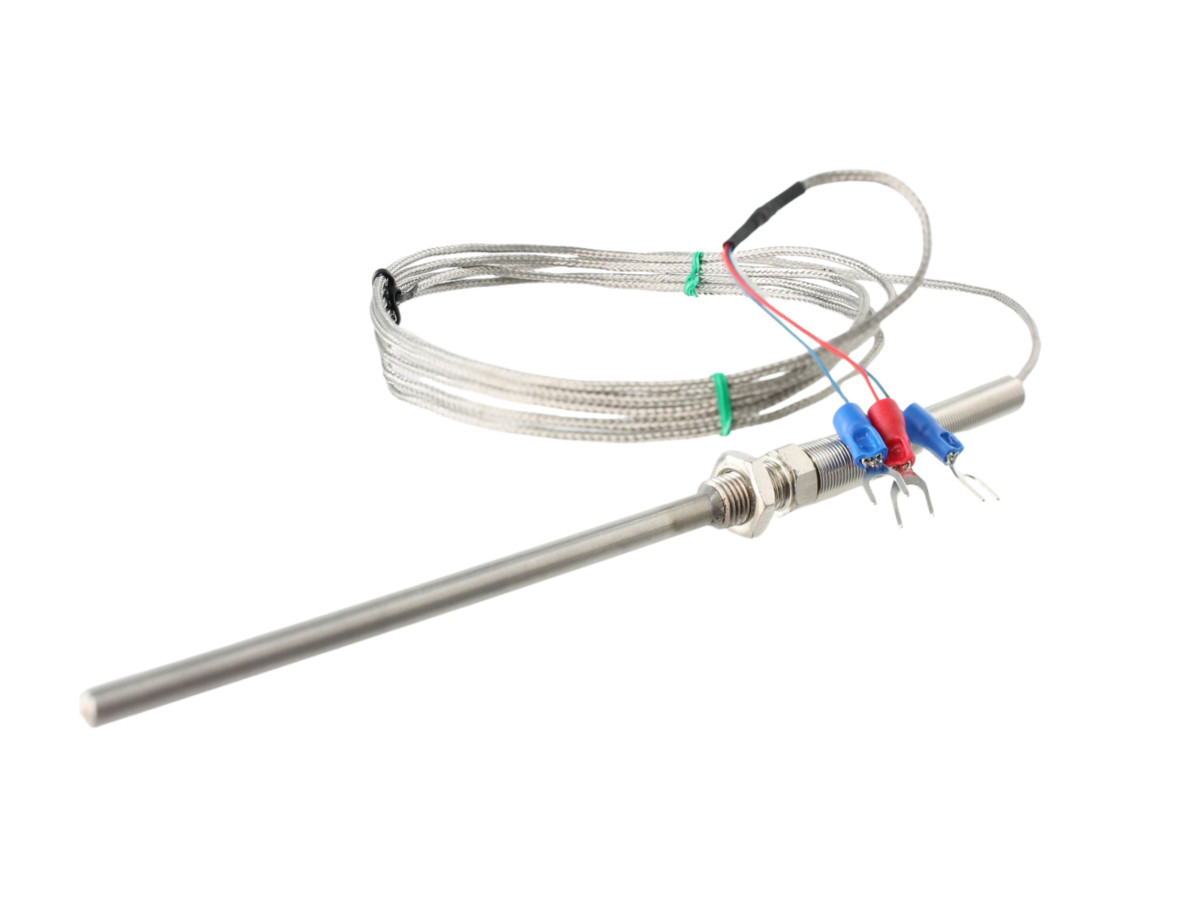
Types of Temperature Sensors
Temperature measurement is essential in industrial processes, laboratories, and electronic applications. For this purpose, a variety of sensors are used, each with specific characteristics regarding accuracy, temperature range, stability, and cost. Among the most common are Type J and Type K thermocouples, PT100 and NI120 resistance sensors, and PTC sensors.
1. Type J Thermocouple
The Type J thermocouple is composed of two metals: iron (Fe) and constantan (Cu-Ni).
Typical range: –40°C to 750°C
Advantages: low cost, fast response, and suitable for dry, non-oxidizing environments.
Disadvantages: iron oxidizes easily, reducing lifespan at high temperatures.
2. Type K Thermocouple
Type K is the most widely used thermocouple in industry, made of chromel (Ni-Cr) and alumel (Ni-Al).
Typical range: –200°C to 1,260°C
Advantages: wide operating range, good stability, and low cost.
Disadvantages: less accurate than resistance sensors and sensitive to reducing atmospheres.
3. PT100 (Platinum RTD)
The PT100 is a Resistance Temperature Detector (RTD) made of platinum with a nominal resistance of 100 Ω at 0°C.
Typical range: –200°C to 600°C
Advantages: high accuracy, excellent repeatability, and long-term stability.
Disadvantages: higher cost and requires more sophisticated measurement circuits.
4. NI120
The NI120 is a nickel RTD with a nominal resistance of 120 Ω at 0°C.
Typical range: –80°C to 260°C
Advantages: lower cost than PT100 and high sensitivity within its working range.
Disadvantages: lower linearity and stability compared to PT100.
5. PTC Sensors
PTC (Positive Temperature Coefficient) sensors are resistors whose resistance increases significantly with temperature.
Typical range: varies depending on the material, generally –50°C to 150°C
Advantages: robust, inexpensive, and widely used for thermal protection in motors and electronics.
Disadvantages: non-linear and not highly accurate for precise measurement; more commonly used as detectors rather than exact measuring devices.
General Summary
- Thermocouples (J and K): wide range, fast response, lower accuracy.
- RTDs (PT100 and NI120): high accuracy and stability; widely used in industrial quality control.
- PTC: ideal for thermal protection, not for high-precision measurement.
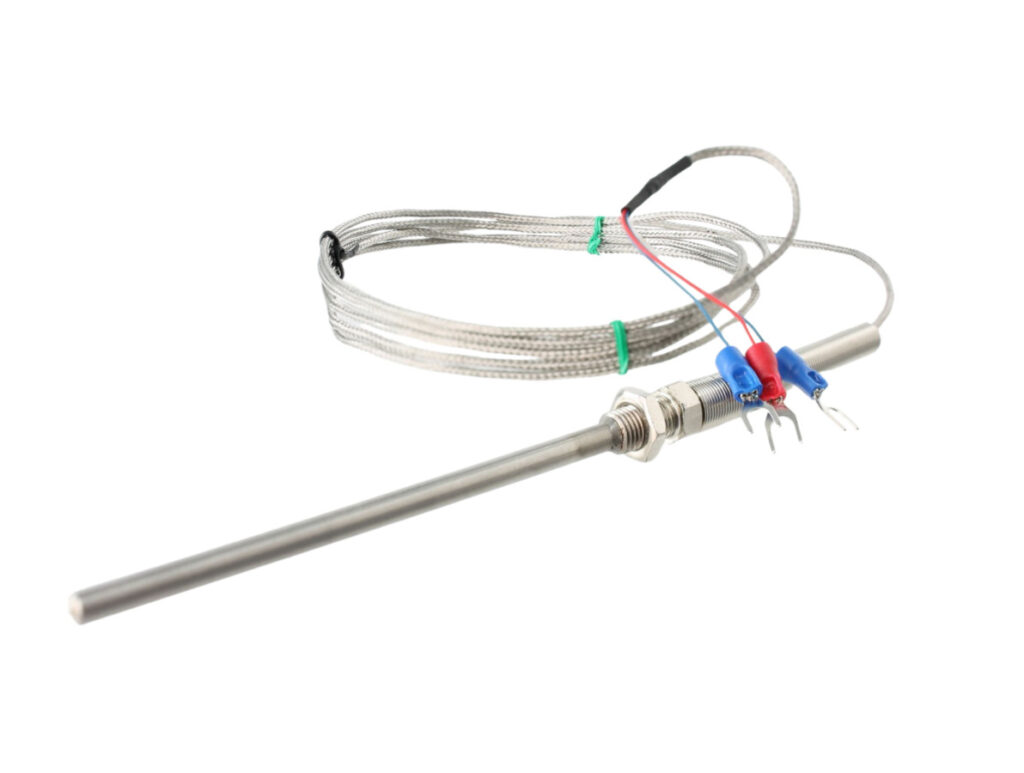
Depending on the application, temperature sensors may feature a welded tip for internal measurement of electrical heaters, a metallic probe (bulb) for measuring the heated product, or a threaded head for installation in tanks to measure container temperature.
Sensors can also be supplied with different cable types:
- Teflon cable (up to 260°C)
- Fiberglass cable (up to 450°C)
- Metal braided cable (up to 700°C)
Looking for a Temperature Controller? Find the Perfect Solution at Paulista Heaters!
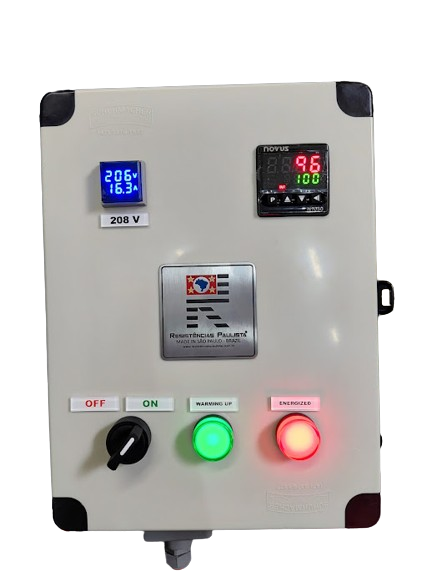
Perfect for Precise Temperature Control. Learn More…