
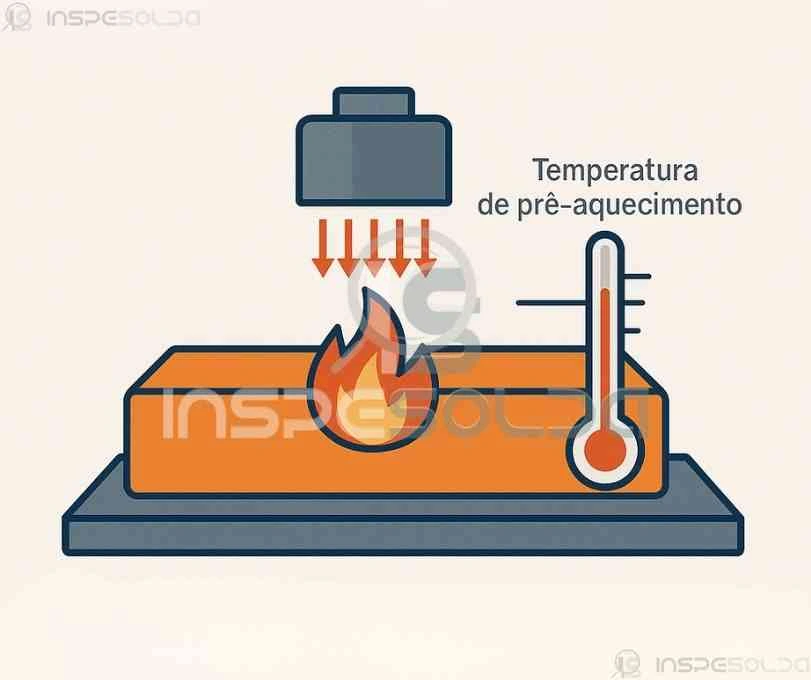
Most difficulties encountered in electric heating systems can be quickly resolved when the correct amount of heat required for the process is properly determined. To achieve this, the required heat must be converted into electrical power (kW), allowing the selection of the most appropriate heater. Whether heating solids, liquids, or gases, the calculation logic remains essentially the same.
All heating projects involve the following steps:
Definition of the Heating Problem
• Gather all relevant application data.
• Prepare a sketch or schematic to facilitate visualization of the situation.
Power Requirement Calculation
(According to “Basic Calculation for Power Energy Evaluation”)
• Power required for initial heating (start-up).
• Power required to maintain the process at the desired temperature.
• Heat losses through walls, surfaces, and equipment structure.
Review of Operating Factors
• Maximum flow rate of the material to be heated.
• Type and efficiency of thermal insulation.
• Mass and dimensions of materials.
• Time required for initial heating and subsequent cycles.
• Ideal operating temperature.
• System efficiency.
• Safe watt density limits.
• Mechanical aspects (expansion, dimensions, available space).
• Environmental conditions.
• Expected heater service life.
• Electrical installation characteristics.
• Safety parameters.
Heater Selection
• Define the appropriate heater type.
• Choose the correct size.
• Determine the required quantity.
Control System Selection
• Type and positioning of the temperature sensor.
• Temperature controller models.
• Power controller types.
The heating problem must be clearly defined, especially regarding operating conditions.
When designing a thermal system, it is not always possible to predict all variables. Therefore, the use of a safety factor is essential. It increases heater capacity beyond the strictly calculated value, preventing failures due to unforeseen conditions. After this initial definition, the required power calculation proceeds.
Determination of Thermal Energy
Thermal energy (Q) is heat.
In any heating process, the objective is to raise or maintain the temperature of a solid, liquid, or gas at appropriate levels. In general, applications are divided into two groups:
• Constant temperature processes.
• Variable temperature processes.
The calculation principles are similar for both.
Constant Temperature Applications
In these cases, the material temperature is maintained at a fixed value, which simplifies calculations due to minimal operational variations. Typical examples include comfort heating systems and freeze protection for pipelines.
Variable Temperature Applications
Here, the process includes initial heating and multiple operational variables. The total required energy calculation involves summing all these variables, making the process more complex than constant-temperature cases. Considered factors include:
Total Energy Absorbed
Includes energy required to heat the material, latent heat (fusion or vaporization), and heating of containers, supports, and other components.
Total Energy Lost
Includes losses by conduction, convection, radiation, ventilation, and evaporation during start-up and operation.
Safety Factor
Additional reserve capacity to compensate for unforeseen or unaccounted variables.
Application Procedure
Heater selection depends on the greater of two power requirements:
• Power required for initial heating within a defined time.
• Power required to maintain temperature during operation.
Normally, start-up power differs from continuous operation power. Therefore, both conditions must be analyzed before equipment selection.
Heating Energy Calculation
The first step is to determine the absorbed energy.
If a phase change occurs (fusion, vaporization, etc.), latent heat must be included in calculations — both for start-up and maintenance.
At Start-up
• Heat absorbed by the product and associated materials (tanks, drums, supports).
• Latent heat (fusion or vaporization).
• Time required to reach the desired temperature.
During Operation
• Continuous heat absorbed by the product, conveying equipment, and replenished material.
• Latent heat when applicable.
• Process time or cycle duration.
Determination of Heat Losses
Materials exposed to the environment lose heat through radiation, conduction, and convection; liquids also lose energy through evaporation.
These losses must be estimated and added to the total calculation.
Start-up Losses
Initially low (equipment at ambient temperature), gradually increasing until operational temperature is reached. The average between initial and final values is typically used.
Operational Losses
At this stage, losses reach maximum levels and must be added to the system’s required power.
Thermal Loss Estimates
Graphs and tables allow calculation of radiation, conduction, and convection losses on different surfaces, typically expressed in kcal/m² or similar units.
Safety Factor
The safety factor compensates for variables that cannot be fully predicted, such as:
• Ambient temperature variations.
• Voltage fluctuations.
• Door openings.
• Changes in material temperature.
• Influence of external elements.
Small and stable systems require lower safety factors; large and complex systems require higher values.
General Safety Factor Guidelines:
• Small systems: 10%
• Medium level systems: 20%
• Large systems: 20% to 35%
This factor must be added to the final required power calculation.
Keep Your Pipes at the Perfect Temperature – Paulista Heaters Can Help!
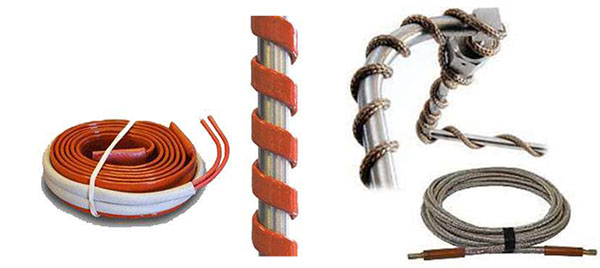
Heating Tape and Heat Tracing Solutions for Pipe Heating.Learn More…